3D Printing Services
Precision 3D Printing
For Metal and Plastic
At Yumo Parts, specializes in high-accuracy 3D printing for metal and plastic components with rapid delivery.
Response within
1day
Lead time from
1week
MOQ
1piece
ISO 9001:2015
3D Printing Materials
Metals
Aluminum
Aluminum is a versatile metal material that is lightweight and boasts excellent strength. It also has high thermal and electrical conductivity, making it ideal for use in heat exchangers and electronic components.
Additionally, aluminum is highly valued for its toughness and resistance to shattering at low temperatures. This makes it a preferred material for parts in artificial satellites and cryogenic plants. Also, because aluminum is non-toxic and odorless, it's widely used in a variety of applications, from machine and equipment parts to everyday household items.
Key Characteristics
High strength
Lightweight
Excellent cold resistance
High thermal and electrical conductivity
Hygienic

Stainless Steel
Stainless steel is an alloy steel created by adding chromium and nickel to iron. It's a material with excellent strength, corrosion resistance, and heat resistance. The passive film formed on its surface by the addition of chromium protects its interior and it has low thermal conductivity, so heat doesn't transfer through it.
The crystal structure and properties of stainless steel change depending on the proportion of alloying elements added during manufacturing and the temperature of heat treatment. Because of this, there are a wide variety of stainless steel types, allowing for their use in a broad range of applications from mechanical parts, construction materials, and everyday household items.
Key Characteristics
High strength
Excellent corrosion resistance
Excellent heat resistance
Low thermal and electrical conductivity
Hygienic

Inconel
Inconel is a nickel-chromium based superalloy often used in applications where high temperatures, pressure, or mechanical loads are present. Inconel is oxidation and corrosion resistant, and forms protective layer when heated. Additionally, inconel keeps its strength over a wide temperature range, making it a good alternative for aluminum or steel in high-temperature applications.
Some common applications where inconel is used are turbocharger components, motor components, steam generators, racing exhaust systems, aerospace components, and more.
Key Characteristics
Exceptional high-temperature strength
Excellent corrosion resistance
Excellent oxidation resistance
Non-magnetic
Creep resistance

Maraging Steel
Maraging steel is a high-strength, low-carbon steel alloy known for its superior strength and toughness, which is achieved through a special heat treatment process called maraging. This process involves solution treating, quenching, and then aging the steel, leading to the spread of intermetallic compounds that significantly increase its hardness without a substantial loss in malleability. Additionally, maraging steel exhibits excellent dimensional stability during heat treatment, making it suitable for precision components.
Some common applications where maraging steel is used are tooling, aerospace components, high-performance sporting goods, and critical structural parts requiring high strength-to-weight ratios.
Key Characteristics
Very high strength
Excellent dimensional stability
High toughness
Good malleability
Good corrosion resistance

Plastics
PEKK
PEKK (Polyetherketoneketone) is a high-performance thermoplastic that offers an impressive combination of properties, making it suitable for extremely demanding applications. PEKK stands out for its exceptional mechanical strength, high heat resistance, and excellent chemical resistance. PEKK is used for a wide range of applications from aerospace to medical/dental products (PEKK is biocompatible).
One of PEKK's notable features is its tunable crystallinity, meaning its properties can be tailored during processing to achieve specific performance characteristics. This flexibility allows for optimization in various manufacturing methods, including advanced additive manufacturing (3D printing) where it's gaining significant traction. Additionally, PEKK is inherently flame retardant, so it produces minimal smoke and toxic gases in the event of combustion.
Key Characteristics
Excellent Mechanical Strength
High Heat Resistance
Excellent Chemical Resistance
Good Wear Resistance
Flame Retardancy
Biocompatibility

Onyx
Onyx is a composite material, primarily a blend of nylon and carbon fiber that was specifically developed for 3D printing. It serves as a foundational material for high-strength, stiff, and aesthetically pleasing parts. Its unique composition imbues it with properties that surpass those of many conventional 3D printing plastics like ABS.
Onyx can be printed on its own, offering significant improvements over standard thermoplastics, or it can be further reinforced with continuous fibers such as carbon fiber, fiberglass, or Kevlar, to achieve strengths comparable to or even exceeding aluminum, depending on the fiber reinforcement. This versatility allows for the creation of parts with tailored mechanical properties for specific demanding environments.
Key Characteristics
Excellent mechanical strength
High heat resistance
Good insulating properties
Excellent chemical resistance
Flame retardancy in some variants
Good impact resistance

ULTEM
ULTEM is a high-performance thermoplastic renowned for its exceptional balance of mechanical, thermal, and electrical properties, particularly at elevated temperatures. ULTEM has become a go-to material for demanding applications in industries such as aerospace, automotive, medical, and electronics, where conventional plastics fall short.
ULTEM's strength and rigidity are maintained across a wide temperature range, and it exhibits excellent dimensional stability, meaning it holds its shape and size even under stress or temperature fluctuations. Additionally, its flame retardancy and low smoke generation are critical for applications where fire safety is paramount. Furthermore, ULTEM is highly resistant to a broad spectrum of chemicals, making it suitable for harsh environments where exposure to various solvents, oils, and other aggressive substances are common.
Key Characteristics
High heat resistance
Excellent mechanical strength
Excellent insulating properties
Excellent chemical resistance
Flame retardancy
Great hydrolytic stability
PA
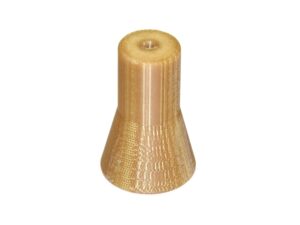
PA (Polyamide) is a widely used engineering plastic renowned for its excellent balance of mechanical properties, wear resistance, and chemical resistance. It possesses good toughness, high tensile strength, and a low coefficient of friction, making it suitable for a variety of applications.
PA is also recognized for its good fatigue resistance and electrical insulating properties. While generally resistant to many chemicals, some types of PA can be affected by strong acids and bases. Its moisture absorption can lead to dimensional changes and a reduction in some mechanical properties, a factor that needs to be considered in design. Additionally, PA exhibits good impact strength and a relatively high melting point, allowing for use in moderate temperature environments.
Key Characteristics
Excellent wear resistance
Good chemical resistance
High toughness
Electrical insulating properties
Good impact strength

ASA
ASA (Acrylonitrile Styrene Acrylate) is a high-performance engineering thermoplastic that is often considered an improved alternative to ABS, particularly for outdoor applications. It retains many of the desirable characteristics of ABS, such as toughness and rigidity, while significantly improving weather and UV resistance.
ASA boasts excellent resistance to atmospheric influences, including UV radiation, moisture, and extreme temperatures, making it highly stable and resistant to yellowing or degradation when exposed to sunlight over long periods. It also exhibits good chemical resistance to diluted acids, alkalis, gasoline, greases, and oils.
Furthermore, ASA offers good heat resistance, maintaining its properties at temperatures typically up to 90-100°C. Its dimensional stability, high gloss, and good antistatic properties contribute to its use in a wide range of demanding applications. Its superior outdoor performance makes it a preferred choice where long-term aesthetic and mechanical integrity are critical.
Exceptional UV and weather resistance
Good mechanical strength
High impact resistance
Excellent color retention
Good heat resistance
High chemical resistance
High dimensional stability
Good antistatic properties

Epoxy
Epoxy is highly valued for its outstanding adhesive qualities, capable of bonding a wide range of materials, including metals, ceramics, wood, and various plastics. It possesses excellent mechanical strength, including high tensile, compressive, and flexural properties, especially when used in composite materials like Carbon Fiber Reinforced Polymers (CFRP) or Fiberglass Reinforced Polymers (FRP).
Additionally, epoxy resins exhibit superior chemical resistance, making them highly resilient to solvents, acids, and bases once cured. They also provide excellent electrical insulation, dimensional stability with minimal shrinkage during curing, and good heat resistance. The specific properties of an epoxy system can be tailored by selecting different resin formulations and curing agents, allowing for a broad spectrum of applications, from high-performance aerospace components to adhesives, coatings, and electrical encapsulants.
Key Characteristics
Exceptional adhesion
High mechanical strength
Superior chemical resistance
Excellent electrical insulation
High dimensional stability
Good heat resistance

Red Wax
Red wax, often used in 3D printing for investment casting patterns, is a thermoplastic material. This means that unlike thermosetting plastics, it can be repeatedly melted and solidified without undergoing a chemical change, allowing for easy removal and reuse.
Additionally, Red wax can be printed into intricate patterns, which are then used to create molds for casting metal parts. Its low ash content upon burnout is crucial, as it ensures that the mold cavity remains clean and free of residue, which is essential for producing high-quality castings. The material's ability to melt at relatively low temperatures allows for easy removal from ceramic molds, preventing damage to the mold itself. Additionally, its smooth surface finish contributes to the high dimensional accuracy and surface quality of the final cast parts. The malleability and ease of manipulation of red wax, even after printing, provide flexibility for post-processing and refinement of the patterns.
Key Characteristics
Melts at relatively low temperatures
Smooth surface finish
Good dimensional accuracy
Malleable and easy to manipulate

PC-ISO
PC-ISO (Polycarbonate-ISO) is an industrial thermoplastic specifically engineered for applications requiring biocompatibility and high performance. It is a specialized grade of polycarbonate that offers a unique combination of strength, heat resistance, and medical compatibility, making it a crucial material in advanced 3D printing.
PC-ISO stands out due to its compliance with stringent biocompatibility standards, notably ISO 10993 and USP Class VI. This makes it suitable for direct and indirect contact with the human body, facilitating its use in medical devices, surgical tooling, and pharmaceutical applications. Beyond its biological compatibility, PC-ISO maintains the excellent mechanical properties characteristic of polycarbonate, including high tensile and flexural strength, and good impact resistance. It also exhibits good heat deflection temperatures and dimensional stability, ensuring parts retain their form and function in various environments, including those requiring sterilization via methods like gamma irradiation, ethylene oxide (EtO), or steam.
Key Characteristics
Biocompatible
Sterilizable
High mechanical strength
Good heat resistance
High dimensional stability
Great for medical, pharmaceutical, and food-contact applications
PC-ABS
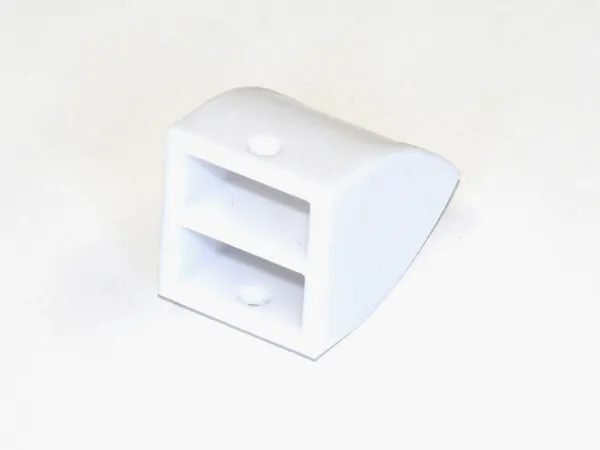
PC-ABS (Polycarbonate-Acrylonitrile Butadiene Styrene) is a high-performance thermoplastic blend that combines the best characteristics of two widely used polymers: the high heat resistance and strength of polycarbonate (PC) with the ductility, flexibility, and ease of processing of acrylonitrile butadiene styrene (ABS). This unique combination makes PC-ABS a highly versatile material for 3D printing, particularly in demanding industrial and functional applications.
PC-ABS is highly regarded for its exceptional balance of mechanical properties. It offers superior impact strength, even at low temperatures, making it ideal for parts that need to withstand significant stress and shock without breaking. Its high heat deflection temperature allows parts to maintain their shape and structural integrity in elevated temperature environments, such as automotive or electronic enclosures. Additionally, PC-ABS provides good dimensional stability, minimizing warping during printing and ensuring accurate, consistent parts. Its improved surface finish compared to pure PC, and ability to be easily post-processed (painting, plating, etc.), adds to its appeal for producing aesthetic and functional prototypes, tooling, and even low-volume production parts. Some formulations also offer flame-retardant properties, enhancing their suitability for certain safety-critical applications.
Key Characteristics
High impact strength
Excellent heat resistance
Good dimensional stability
Some variants feature flame retardancy

ABS
ABS (Acrylonitrile Butadiene Styrene) is a common thermoplastic polymer widely recognized for its robust balance of mechanical properties, affordability, and ease of processing. It is formed from a combination of three distinct monomers, each contributing unique characteristics to the final material.
ABS is highly valued for its good impact resistance, providing durability to parts that may experience knocks or stresses. It also offers good rigidity and hardness, making it suitable for structural components and enclosures. The styrene component gives it a good surface finish and makes it easily colorable, which is beneficial for aesthetic applications. While it has moderate heat resistance compared to some engineering plastics, it maintains its form well in many common environments. ABS is a popular choice in 3D printing, particularly for functional prototypes, tools, and consumer goods, as it can be sanded, painted, and glued, allowing for excellent post-processing capabilities.
Key Characteristics
Good impact resistance
Glossy appearance
Insulting properties
Good post-processing capabilities
PP
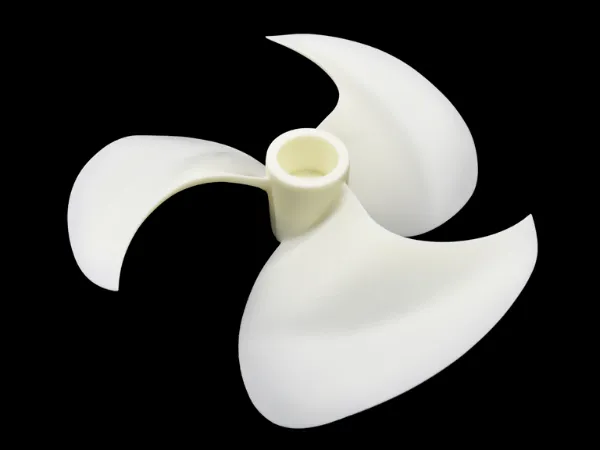
PP (Polypropylene) is a versatile thermoplastic polymer known for its excellent balance of properties and cost-effectiveness. It is one of the most widely produced and utilized plastics globally, finding applications across numerous industries, and its increasing use in 3D printing reflects its growing importance in additive manufacturing.
PP is highly valued for its exceptional chemical resistance, making it highly resilient to a broad range of acids, bases, and organic solvents. This property makes it ideal for parts exposed to harsh chemical environments, such as chemical containers, laboratory equipment, and automotive fluid systems. Furthermore, PP exhibits good fatigue resistance, meaning it can withstand repeated bending or flexing without breaking, which is crucial for living hinges and snap-fit assemblies. It also boasts good electrical insulation properties and a low density, contributing to lightweight parts.
Key Characteristics
Excellent chemical resistance
Low density
Good electrical insulation
Good fatigue resistance

Why Choose Yumo Parts?
Rapid Quoting
At Yumo Parts, we understand that time is critical. That’s why our team aims to provide quotes within 2 hours during normal business hours.
Every member of our sales staff receives hands-on training in materials and manufacturing processes, ensuring that every quote is accurate and reliable.
Get a fast, precise quote and keep your project moving without delays.
Fast Delivery
At Yumo Parts, your deadlines are our priority. Our lead time begins the moment we receive your drawings or data, so we can move quickly from design to production.
In some cases, we’ve been able to ship parts within just 1 day, and we maintain dedicated capacity for emergency orders to ensure your project stays on track.
Get your precision metal or plastic parts fast, without compromising quality.
Wide Range of Materials
Yumo Parts offers over 200 different materials to meet the needs of even the most challenging projects. From metals like aluminum, titanium, and stainless steel to high-performance plastics such as PEEK and PPS, we have the right material for precision prototypes, R&D, and low-volume production.
Partner with us to bring your designs to life with the ideal material and exact specifications.
Excellent Technical Capabilities
Our world-class team of engineers and sales specialists has the expertise to tackle even the most complex and challenging projects efficiently.
We combine deep technical knowledge with a comprehensive range of manufacturing and inspection equipment, enabling us to support a wide variety of customer needs - from prototypes and R&D to precision production parts in metals and plastics.
Partner with Yumo Parts for solutions that blend expertise, precision, and efficiency.
Free Consultations
Have technical questions or concerns about your project? Our expert team is here to help.
Yumo Parts offers free consultations to support your design, material selection, and functionality needs, ensuring your parts are optimized for performance and manufacturability.
Contact us today to take advantage of our expert guidance and hands-on support - no strings attached.
Advanced Inspection
At Yumo Parts, we combine expert personnel and state-of-the-art equipment to ensure every part meets your specifications before it ships.
Our machine operators and quality engineers carefully examine each component, using advanced in-house inspection tools to verify compliance and maintain high-precision standards.
Trust us to deliver accurate, reliable parts every time.
Post-Printing Options
Anodizing
Alodine Treatment
Chromate Coating
Electroless Nickel Plating
Gold Plating
Silver Plating
Vacuum Deposition
Buff Polishing
Barrel Polishing
Blasting
Mirror Polishing
Hand Polishing
What is 3D Printing?
3D printing is an additive manufacturing process that builds parts layer by layer from metal or plastic materials based on digital designs. Unlike CNC machining, which removes material, 3D printing allows for the creation of complex geometries, intricate structures, and customized components with high precision and efficiency.
At Yumo Parts, our 3D printing services support prototypes, R&D, and low-volume production, delivering fast turnaround times and high-quality results in a wide range of metals and plastics.
Advantages of 3D Printing
3D printing lets you quickly turn designs into high-quality parts with precision and flexibility.
Fast Lead Times: Get parts faster than traditional methods.
Complex Shapes: Produce intricate geometries impossible with machining or molding.
Versatile Materials: Metals and plastics for a wide range of applications.
Low-Volume Production: Ideal for prototypes, R&D, and small batches.
With Yumo Parts, 3D printing delivers precision, speed, and adaptability for your projects.
Post-Print Finishing
After 3D printing, parts often require precision finishing to achieve the desired surface quality, dimensional accuracy, and functionality. At Yumo Parts, our expert team performs careful post-processing, including machining, sanding, polishing, and surface treatments, to ensure every component meets exact specifications and is ready for use.
We pay close attention to material characteristics and tolerances, delivering high-quality parts that are durable, precise, and production-ready.
Visit Our Osaka Headquarters
Step inside Yumo Parts’ Osaka facility, where precision CNC machining and advanced 3D printing come together under one roof.
With our main factory located at headquarters, we can collaborate seamlessly between engineers, sales, and production teams to deliver high-quality metal and plastic parts - whether it’s prototypes, R&D, or low-volume production.
See firsthand how expert craftsmanship, cutting-edge equipment, and integrated workflows ensure your projects are completed accurately, efficiently, and on time.
How to Work With Us
Upload a File
To provide the most accurate quote and solution, we begin by gathering detailed information about your project requirements.
Get a Quote
Based on the consultation, we provide a quote and tailored proposal.
3D Printing Begins
Once the order is confirmed, we immediately begin production arrangements.
Parts are Shipped
All products are carefully packaged to prevent any damage during shipping.