CNC Machining Services
Precision CNC Machining
For Prototyping
At Yumo Parts, we specialize in high-precision metal and plastic components, delivered with fast turnaround and zero minimum order requirements.
Response within
1day
Lead time from
1week
MOQ
1piece
ISO 9001:2015
CNC Machining Materials
Metals
Aluminum
Aluminum is a versatile metal material that is lightweight and boasts excellent strength. It also has high thermal and electrical conductivity, making it ideal for use in heat exchangers and electronic components. Aluminum is also highly valued for its toughness and resistance to shattering at low temperatures. This makes it a preferred material for parts in artificial satellites and cryogenic plants. Additionally, because aluminum is non-toxic and odorless, it's widely used in a variety of applications, including machine and equipment parts to everyday household items.
Learn More
Stainless Steel
Stainless steel is an alloy steel created by adding chromium and nickel to iron. It's a material with excellent strength, corrosion resistance, and heat resistance. The passive film formed on its surface by the addition of chromium protects its interior. It also has low thermal conductivity, so heat doesn't easily transfer through it. The crystal structure and properties of stainless steel change depending on the proportion of alloying elements added during manufacturing and the temperature of heat treatment. There's a very wide variety of stainless steel types, allowing for their use in a broad range of applications such as misc. parts, construction materials, and everyday household items.
Learn More
Copper
Copper is a metal with the second highest thermal and electrical conductivity, after silver. It is utilized as a conductive material and heat dissipation material in electronic equipment components and heat exchangers. It is a completely non-magnetic metal, which is a key reason why copper is used in the field of electrical and electronic engineering. Moreover, copper possesses antibacterial performance that surpasses general antibacterial effects. When microorganisms adhere to the surface of copper, it destroys their cell membranes, killing bacteria and viruses. Similar to aluminum, it can be used at extremely low temperatures without shattering.
Learn More
Brass
Brass is an alloy of copper and zinc, known for its distinctive golden color and excellent workability. It is widely utilized for its good machinability, corrosion resistance, and aesthetic appeal in a variety of applications, including musical instruments, decorative items, and precision parts. Its excellent workability makes it a preferred material for complex geometries. While not as conductive as pure copper, brass still offers moderate electrical and thermal conductivity, making it suitable for certain electrical connectors and fittings. It also exhibits a degree of antimicrobial properties, similar to copper, contributing to its use in sanitary applications and door hardware. Additionally, brass is easily recyclable.
Learn More
Titanium
Titanium is a metal material that is lightweight and possesses excellent specific strength and heat resistance. Its melting point is approximately 1668°C, which is higher than common materials like aluminum, copper, and stainless steel, allowing it to exhibit stable properties even in extremely high-temperature environments. Additionally, titanium is chemically active, and when exposed to oxygen in the air, it forms an oxide film. This titanium oxide film protects the interior, resulting in high corrosion resistance. Also, it is a highly biocompatible metal and is unlikely to cause metal allergies, leading to its use in medical devices and treatment instruments.
Learn More
Molybdenum
Molybdenum is a high-melting-point metal with a melting point of approximately 2,620°C and a boiling point of approximately 4,650°C. It ranks as the 5th highest melting point among metal materials, making it a suitable material for use in ultra-high temperature environments. Molybdenum maintains high strength even under high temperatures. Additionally, it has a low coefficient of linear thermal expansion, providing excellent dimensional stability at high temperatures. In addition to being used as a material for machining, it is also utilized as an additive metal in alloys. Alloys with added molybdenum gain improved hardness and resistance to deformation. Molybdenum also has relatively high thermal conductivity, approximately 142 W/(m·K) at 20°C.
Learn More
Magnesium
Magnesium is the lightest of all practical metals and possesses excellent specific strength. With a specific gravity of 1.74 g/cm³, it is approximately two-thirds the weight of aluminum (2.70 g/cm³), another lightweight metal. Due to its high strength-to-weight ratio, it is used in various parts with the aim of reducing product weight. Magnesium also has good machinability, making it suitable for processing into precision parts. Its melting point is 650°C, similar to aluminum. Additionally, magnesium boasts the highest vibration absorption capacity among practical metals and has electromagnetic shielding capabilities, exhibiting a stable shielding effect of 90-100 dB in the 30-200 MHz band.
Learn More
Plastics
PEEK
PEEK (Polyether Ether Ketone) is a super engineering plastic that boasts the highest level of heat resistance and mechanical strength among resin materials. It also exhibits high standards in properties like dimensional stability, chemical resistance, and wear resistance. It's flame retardant, making it difficult to burn, and produces very low amounts of toxic gases upon combustion. Additionally, PEEK has exceptionally high hot water resistance among resin materials, allowing for continuous use in steam at 200-250°C.
Learn More
PPS
PPS (Polyphenylene Sulfide) is a super engineering plastic that offers excellent heat resistance and mechanical strength. It also boasts high-level properties in dimensional stability, chemical resistance, and wear resistance, making its performance second only to PEEK. Despite its high capabilities, the price for materials of the same size is approximately one-quarter to one-half that of PEEK. Additionally, PPS has extremely low water absorption, with an absorption rate of only 0.02% after 24 hours of immersion at 23°C. It is also flame retardant, making it difficult to burn, and produces very low amounts of gas upon combustion. PPS also exhibits excellent weatherability, so it has great outdoor application resistance properties.
Learn More
PEI
PEI (Polyetherimide) is a super engineering plastic known for its high heat resistance, with a continuous operating temperature of 170°C. PEI boasts tensile strength exceeding PEEK and exhibits high creep resistance across a wide temperature range. A key characteristic is its very low degradation at high temperatures. Additionally, PEI has excellent hydrolysis resistance, allowing it to withstand repeated steam sterilization. Its low water absorption rate and low coefficient of linear thermal expansion contribute to its superior dimensional stability. PEI is also flame retardant, making it difficult to burn, and produces low amounts of gas during combustion.
Learn More
PTFE
PTFE (Polytetrafluoroethylene) is a super engineering plastic characterized by its high sliding properties and wear resistance. Its smooth surface boasts an extremely low coefficient of friction, making it highly effective as a sliding component. It offers excellent heat resistance, with a continuous operating temperature of 260°C, and maintains its strength even at temperatures as low as -250°C. Additionally, its molecular structure, which resists bonding with oxygen, contributes to its flame retardancy, rated V-0 under the UL94 standard. PTFE also has excellent water repellency and does not absorb water.
Learn More
PI
PI (Polyimide) is a super engineering plastic known for its exceptionally high heat resistance. Unlike PEEK and PPS, it is a non-thermoplastic material, meaning it does not melt when heated. This property allows it to maintain high mechanical strength even under extreme temperatures. It has a continuous operating temperature of 300°C and can withstand momentary exposure to temperatures up to 400°C. PI can also be used in extremely low-temperature environments, with cold resistance down to -270°C. Additionally, its low coefficient of linear thermal expansion provides excellent dimensional stability against temperature changes. It boasts superior sliding properties and wear resistance, making it suitable for long-term use in high-temperature sliding parts. With its high purity and low outgassing properties, PI is utilized in semiconductor manufacturing equipment, vacuum devices, and aerospace components.
Learn More
PBI
PBI (Polybenzimidazole) is a super engineering plastic that boasts the highest level of heat resistance among all resin materials. It has a continuous operating temperature of 345°C and a low coefficient of linear thermal expansion, resulting in excellent dimensional stability even with heat. Due to its superior strength and heat resistance, PBI can be considered as a potential alternative to metal materials. Additionally, PBI offers excellent wear resistance, making it suitable for sliding parts in high-temperature areas. It is also flame retardant, achieving a V-0 rating under the UL94 standard. PBI also exhibits strong resistance to acids, alkalis, and organic solvents, and has good plasma resistance.
Learn More
PAI
PAI (Polyamide-imide) is an amorphous super engineering plastic that offers the highest level of performance among thermoplastic resins. It exhibits exceptional tensile strength, compressive strength, wear resistance, and impact resistance even at high temperatures up to 250°C. Its heat deflection temperature and glass transition point also exceed 250°C, allowing it to maintain high strength in high-temperature and high-load environments. Additionally, PAI boasts excellent chemical resistance, showing resistance to most organic and inorganic chemicals. Its dimensional stability, achieved through a low coefficient of linear thermal expansion comparable to metals like aluminum and stainless steel, makes it an ideal metal alternative for lightweight applications.
Learn More
POM
POM (Polyoxymethylene) is an engineering plastic known for its excellent mechanical strength, wear resistance, and chemical resistance. It is free-cutting, rarely produces burrs, and any burrs that do form are easily removed, making it ideal for manufacturing precision parts. Its low water absorption rate, which minimizes dimensional changes due to water or moisture absorption, is another key reason for POM's popularity. Overall, POM offers excellent cost performance relative to its capabilities, making it a central material in resin machining as a versatile option.
Learn More
MC Nylon
MC Nylon (Cast Nylon) is an engineering plastic known for its excellent mechanical strength, heat resistance, and sliding properties. It also boasts superior chemical resistance to organic solvents. Similar to POM, it offers above-average performance in other properties at a low cost, making it a very user-friendly resin material. The standard grade is blue, and the top and bottom surfaces of the material often feature stripe patterns from the manufacturing process. Overall, MC Nylon provides excellent cost performance relative to its capabilities, establishing it as a core material in resin machining.
MC Nylon CNC Machining
Bakelite
Bakelite (Polyoxybenzylmethyleneglycolanhydride) is a type of phenolic resin classified as a thermosetting resin. Its robust molecular structure restricts the thermal movement of molecules, resulting in high mechanical strength and heat resistance. It's commonly distributed as laminated sheets with paper or cloth as the base material. Cloth Bakelite offers higher mechanical strength but also comes at a higher cost. Additionally, there are also flame-retardant grades that have flame retardants added, as well as black color variations available. Bakelite's affordability and excellent characteristics make it easy to use, and it's utilized in various applications as a versatile material.
Learn More
Polycarbonate
Bakelite (Polyoxybenzylmethyleneglycolanhydride) is a type of phenolic resin classified as a thermosetting resin. Its robust molecular structure restricts the thermal movement of molecules, resulting in high mechanical strength and heat resistance. It's commonly distributed as laminated sheets with paper or cloth as the base material. Cloth Bakelite offers higher mechanical strength but also comes at a higher cost. Additionally, there are also flame-retardant grades that have flame retardants added, as well as black color variations available. Bakelite's affordability and excellent characteristics make it easy to use, and it's utilized in various applications as a versatile material.
Learn More
ABS
ABS (Acrylonitrile Butadiene Styrene) is a general-purpose plastic with an excellent balance of performance that is classified as a thermoplastic amorphous resin. Its high strength and glossy appearance lead to its use in exterior parts, among other applications. ABS's continuous operating temperature ranges from 55 to 100°C and the inclusion of butadiene contributes to its excellent impact resistance.
Learn More
CNC Milling Size
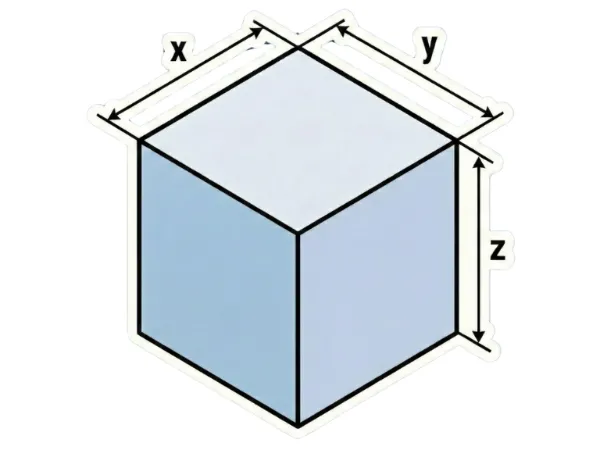
※All dimensions are in mm.
※Dimensions represent machine capacity; standard material availability may vary.
※Processing may not be possible for certain geometries, even within the specified range.
※This table lists sizes available for quick-turn delivery. For larger sizes, please consult us regarding feasibility.
CNC Turning Size

※All dimensions are in mm.
※Dimensions represent machine capacity; standard material availability may vary.
※Processing may not be possible for certain geometries, even within the specified range.
※This table lists sizes available for quick-turn delivery. For larger sizes, please consult us regarding feasibility.
Verified Precision
ISO 9001:2015 certified. Inspection before every shipment.
Custom parts, custom inspection
Every part gets a tailored inspection session, using a variety of tools ranging from calipers to 3D and image measurement equipment.
More than dimensions
We go beyond just the drawing. Thread accuracy, fit checks, mating parts with supplied parts, we check all of it. Before it leaves our building doors.
Post-Machining Options
Anodizing
Alodine Treatment
Chromate Coating
Electroless Nickel Plating
Gold Plating
Silver Plating
Vacuum Deposition
Buff Polishing
Barrel Polishing
Blasting
Mirror Polishing
Hand Polishing
Please feel free to reach out to us with any concerns.
We support R&D teams